
Log Island
- Alyssa Mahaffey
- Jan 25, 2019
- 5 min read
Day Two; 07/01/2019
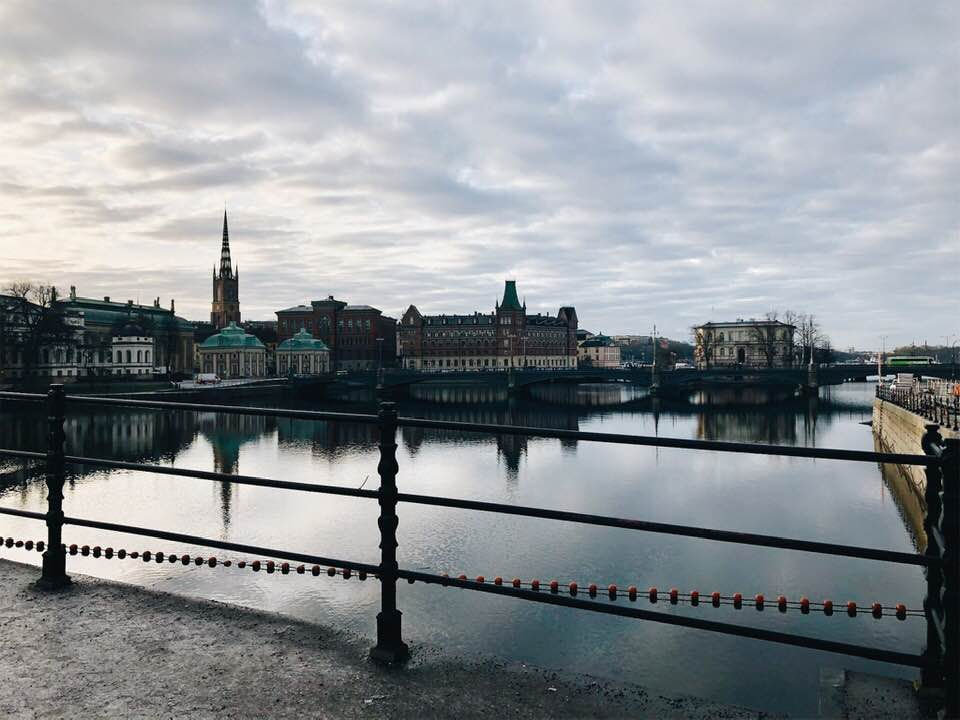
With a full day of traveling behind us and the most decent night of sleep we could have possibly had, we awoke to a day of exploring the city of Stockholm, Sweden. Staying in a hostel was quite a new experience for me, especially staying in a room along with four other girls that I had only known for a brief amount of time. Environmentally speaking, staying in a hostel was the best and most sustainable thing that we had done on the sustainability seminar thus far. In order to keep costs down, people are given a small room with a various number of bunk beds, a shared bathroom, and no television. While this set up allows hostels to be generally cheaper, the smaller rooms and lack of extra devices (such as televisions) also gave way for less energy use. Being in the most sustainable and environmentally friendly region in the world, I began to take notice of even the slightest differences that helped to give Stockholm and other cities we visited this status. Even the hallways only lit up once you opened the door to that specific floor. Breakfast in our hostel consisted of coffee, baguettes, Nutella or jam, meat and cheeses, cereal, and milk. Being someone who has stayed in many hotels that offer breakfast in the morning, I have noticed that milk alternatives are not readily available like they were in the hostel. As the fight for animal rights and the awareness of allergies continues, vegetarian and vegan alternatives are slowly making their way to becoming the norm in America while in Scandinavian countries this seemed to have already been the norm.
After breakfast was completed and I had been satisfied by bread and chocolate spread, we head out onto the town for a guided tour of Stockholm. For most people in the United States, specifically on the Eastern coast, when you say the word “city” the first that comes to mind is New York City. The trash-filled and crowded (yet surprisingly beautiful) concrete jungle. For the majority of the students on the trip, this was our idea of a city. Yet this wasn’t Stockholm. Although it has a much smaller population in comparison to NYC, there wasn’t trash cluttering the pavement. Possibly one piece of trash and I really do mean maybe. Stockholm recycles 90% of their trash and while this may seem high it is also because Sweden imports trash from other countries and then recycles it. But even so, it was the cleanest city I have ever seen and I cannot emphasize this enough. Along with the lack of trash was the overwhelming sense that public transport and bikes were the preferable modes of transportation. Although most Swedes at this point in mid-January were still on holiday, the lack of cars confirmed that bikes, buses and the subway dominated commutes to work.
Our tour of Stockholm was very widespread, connecting the concepts of sustainability and the environment to the history and future of the city. As my projects were specifically geared towards the terms as they related to animals, there was one historical fact that stuck with me. In the “olden” days when roofs were constructed in order to save rainwater rather than for the implantation of solar panels or simply for the aesthetic, people decided that they could also be used as mini-farms. Since during this time period it wasn’t as easy to import fresh vegetables, fruits, and meats from rural to urban areas, people took it upon themselves to provide their own food. While the farms included planted crops, they also housed farm animals such as goats and chickens. Using the rain to water their crops and hydrate their animals along with using manure from the animals to provide nutrients for the crops, these mini roof farms became quite sustainable back before the phrase had even been coined.

The city overall was beautiful. A series of over fourteen islands make up “Log Island”, the Swedish name for Stockholm. Sweden itself is made up of over 200,000 islands, one of the smallest in Stockholm is only big enough for one house. The city is an array of bridges, waterways, and architecture from different eras. A photographers dream. After a long and quite chilly a few hours of walking around the city, we ended the tour with lunch. I don’t speak Swedish and the languages I do know are nothing even close to Swedish and therefore I filled my plate simply by using my senses. A buffet of Swedish and Scandinavian cuisine was set before us and it was simply delicious. Since traveling, much of the group hadn’t had the chance to mingle yet. But between small cups of coffee and heaving plates of food, we were all finally given the chance to get to know one another. The food break was short lived and once again we were headed out into the city, this time to the Stockholm Environment Institute.

The institute or rather SEI is an international non-profit research and policy organization that undertakes environment and development challenges which in their own words, “bridges science and policy”. As apart of the course we would soon be tasked with writing a policy brief about a specific topic; mine being animals. An expert at the institute explained that after the new administration was elected and funding for environmental research was to become iffy that he moved to Sweden. The institute itself focuses on environmental research affecting people and environments all over the world with a variety of topics. They then relay the information to the public or businesses through policy briefs in order to gain funding or simply spread their knowledge. It was intriguing to see how their work and analysis was changing how the world views environmental and sustainability issues and how much good they are doing with thorough research. The visit gave me insight into the policy side of what I was learning and how such groups are able to sway and enlighten those who make the laws.
After we had finished up with the presentation from SEI we were given the remainder of the day to explore Stockholm. Did I mention that by this time (around 4 pm) it was pitch black outside? Many of us decided to head to the Old Town where the Vasa Museum is located. The warship is a great nautical archeological marvel that was commissioned by the King of Sweden in 1626. Being naive as many kings are, he demanded that the ship have double-decker cannons. In 1628 the ship set out on her maiden voyage, being sent out to sea along with a parade and fireworks. Unfortunately being a windy day and being as the ship was overly top heavy, it only took twenty minutes until she toppled into the ocean. Over 300 years later, the Vasa was finally rediscovered, taking about 30 years to fully retrieve her from the ocean. After spending over a decade in
de-salinization tanks, the Vasa made her debut in her very own museum as the oldest intact ship to be salvaged. As an anthropology major, this was a major highlight of Stockholm for me. Unfortunately, we didn’t have the time (or the krona) to visit the famed ABBA museum, but my days were still filled with the Mamma Mia soundtrack.

Rather than trying local cuisine, a few students and I ended up at a taco joint. Living in the American North East, quality Mexican food is far and few between. Yet across the Atlantic in Stockholm, Sweden I found the most amazing carnitas tacos. Finally, the night ended with us exercising our right to legally drink (responsibly of course).



Comments